Bridging Physical &
Digital Retail
Designing an Omnichannel Onboarding Experience for Chain Store Apps
Overview
Simplifying Complex Omnichannel Workflows
Chain store apps must balance competing demands: merchants need quick access to payment collection and sales management, customers expect seamless loyalty integration and real-time inventory visibility, and the business requires frictionless activation and high engagement. A poor onboarding experience meant abandoned merchant accounts and lost loyalty program adoption.
Merchants were skipping critical setup steps, leading to incomplete data and poor activation metrics.
The Challenge
A Linear, Feature-Heavy, Overwhelming Flow
The initial onboarding flow was overwhelming for first-time users. Merchants dropped off mid-flow when asked to configure payment systems, set up loyalty programs, or validate inventory synchronization. There was no visibility into friction points and no way to personalize by merchant type.
Too many required fields and setup steps presented all at once with no clear priority
One-size-fits-all flow failed both single-store owners and multi-location chain HQs
No visibility into which steps caused friction — guesswork instead of data
Research & Discovery
Listening Before Designing
Research Methods
In-depth interviews with 15 active merchants and 5 non-activated accounts
Behavioral analysis via Mixpanel — drop-off points, session duration, feature utilization
Competitive benchmarking against Shopify, Square, Razorpay
A/B tests validating form length, field ordering, and progressive disclosure
Key Insights
Design Strategy
Three Principles That Drove Every Decision
Show only what's needed now; defer optional config to post-onboarding
Different paths for single stores, multi-location chains, and enterprise accounts
Clear step indicators and estimated time remaining at every stage
Smart tooltips and AI-driven hints right where users need them
Solution & Design
3-Phase Information Architecture
The onboarding was restructured into three distinct phases to reduce decision fatigue and let merchants become productive quickly while leaving room for feature adoption later.
Identity & Trust
Steps 1–2 · Est. 2 min
- Simplified sign-up: business name, email, phone only
- Verification badge timeline + security assurances
- Estimated completion time (8 min) shown upfront
- AI-generated illustrations matching merchant type (grocery, apparel, electronics)
Core Setup
Steps 3–4 · Est. 4 min
- Smart form filling based on GST & business type metadata
- One-click bank account linking via OAuth with major Indian banks
- Quick Test feature: ₹0.01 transaction to verify setup
- Payments activated before optional features surface
Enhancements
Steps 5–6 · Optional
- Loyalty wizard with templated tier structures
- Real-time inventory sync + Google Maps store selection
- Mobile payments QR code generation for contactless
- Multi-language activation (Hindi, Tamil, Telugu, Kannada)
Solution & Design
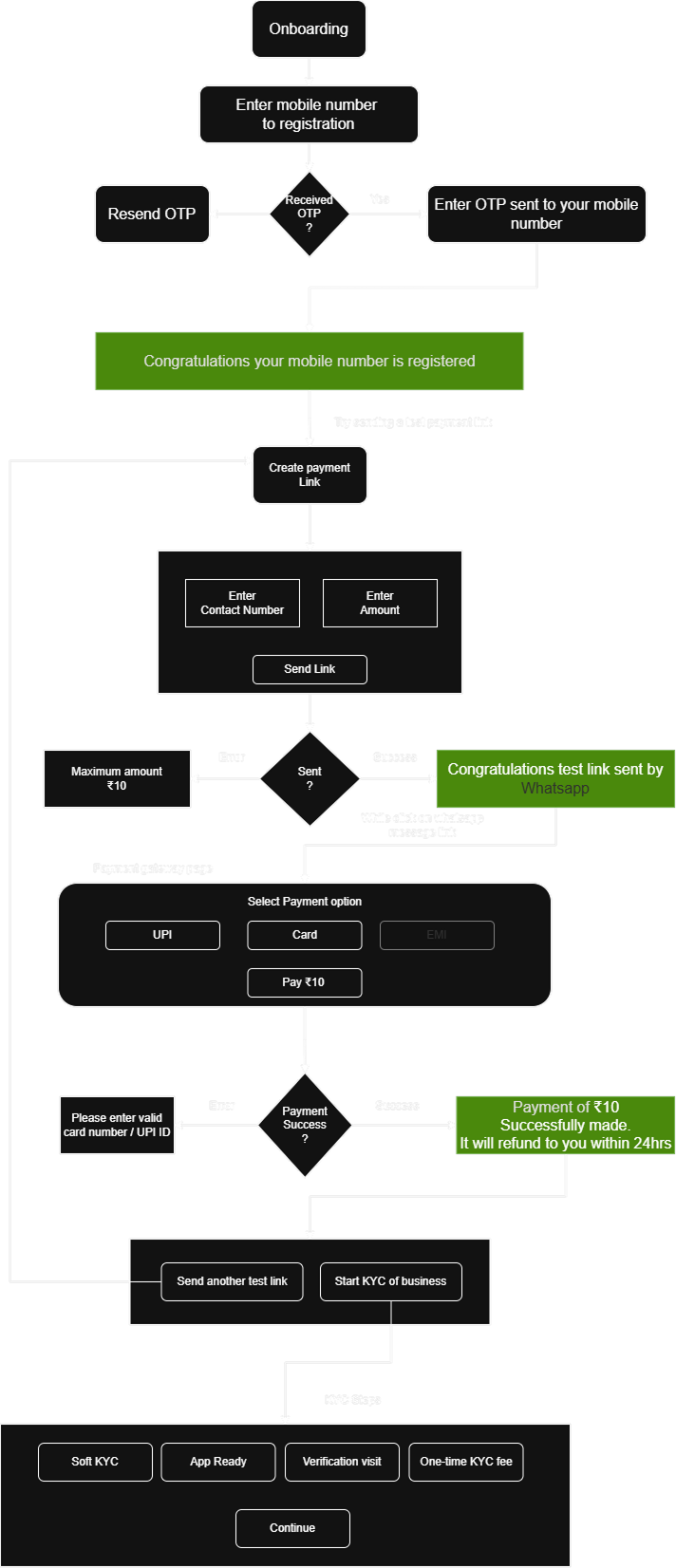
User flow
The onboarding was restructured into three distinct phases to reduce decision fatigue and let merchants become productive quickly while leaving room for feature adoption later.
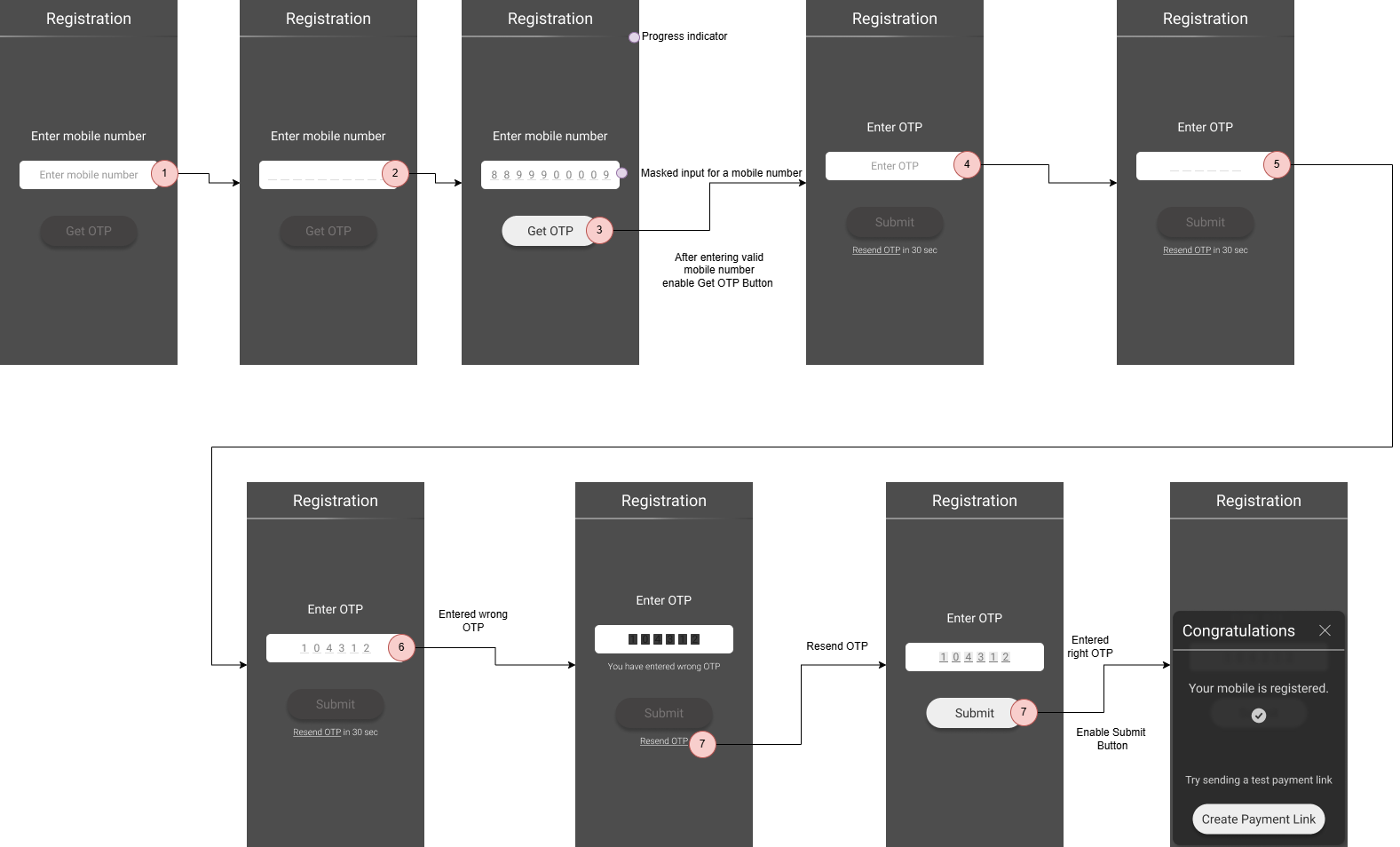
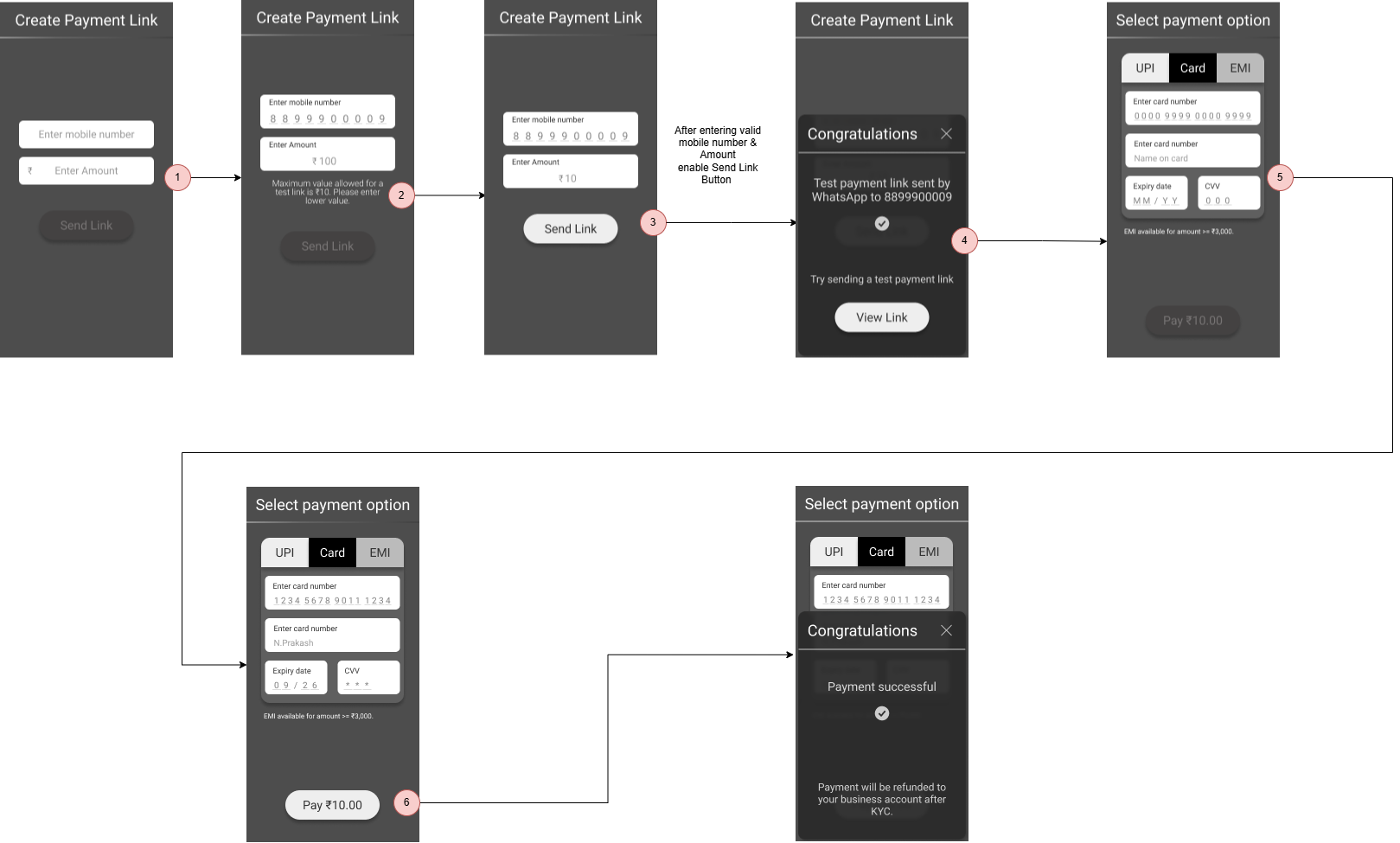
Wireframe flow
Results & Business Impact
The Design Delivered Measurable Outcomes
Completion Rate
(down from 14 min)
Adoption
Score (CSAT)
Merchant activation increased by 36%, translating to $2.1M in new payment volume within 3 months
Support ticket volume for onboarding issues dropped by 52%
NPS for onboarding experience improved from 22 → 58
Loyalty program adoption grew from 8% → 28%, boosting repeat transactions
Key Learnings & Iterations
What We Changed and Why
Phased vs. Linear Flows
A fully branching flow where merchants skipped loyalty setup improved completion but left merchants feeling uninformed about loyalty benefits. Switching to a 'recommended but optional' model with soft prompts improved both completion and feature adoption simultaneously.
Form Validation & Error Handling
Cryptic error messages like "Invalid bank IFSC" caused 18% of drop-offs. Redesigned validation to be forgiving: real-time suggestions, inline corrections, and contextual error messages. This single change improved completion by 12%.
Onboarding for Non-Tech Merchants
Some merchants delegated onboarding to store staff with limited English proficiency. Added video tutorials in local languages and a 'Call an Expert' button connecting merchants directly to the customer success team. Support friction dropped significantly.
Tools Used
Design Stack
Design & Prototyping
AI & Generative
Analytics
Design Process Timeline
8-Week Sprint
Research, interviews with merchants, and competitive analysis against Shopify, Square, Razorpay
Information architecture workshop and flow mapping with product & engineering
Wireframes, iterative feedback sessions, and user testing with A/B variants
High-fidelity design, design system documentation, and engineering handoff
Iterative refinement based on production metrics and live user feedback
Post-Launch & Next Steps
What We're Building Next
Next
AI-powered next-step recommendations based on merchant transaction patterns
Soon
Referral program within onboarding to drive organic network effects
Planned
Enterprise white-label onboarding configurations for chain HQs
Planned
Merchant success guides and post-onboarding engagement sequences
Complexity isn't the problem — perceived complexity is. By making advanced features feel optional and supportive, we paradoxically increased adoption.